Step back in time to Britain's prehistoric past. Students explore ancient monuments, settlements, and daily life during the Stone Age, fostering a deeper understanding of our earliest ancestors.
The Stone Age workshop gives KS2 students an immersive experience of life thousands of years ago. Through VR, children stand beneath the cliffs of Cheddar Gorge, visit ancient standing stones and burial monuments, and step into a Stone Age camp. Rather than abstract timelines, students see and experience the Stone Age world.
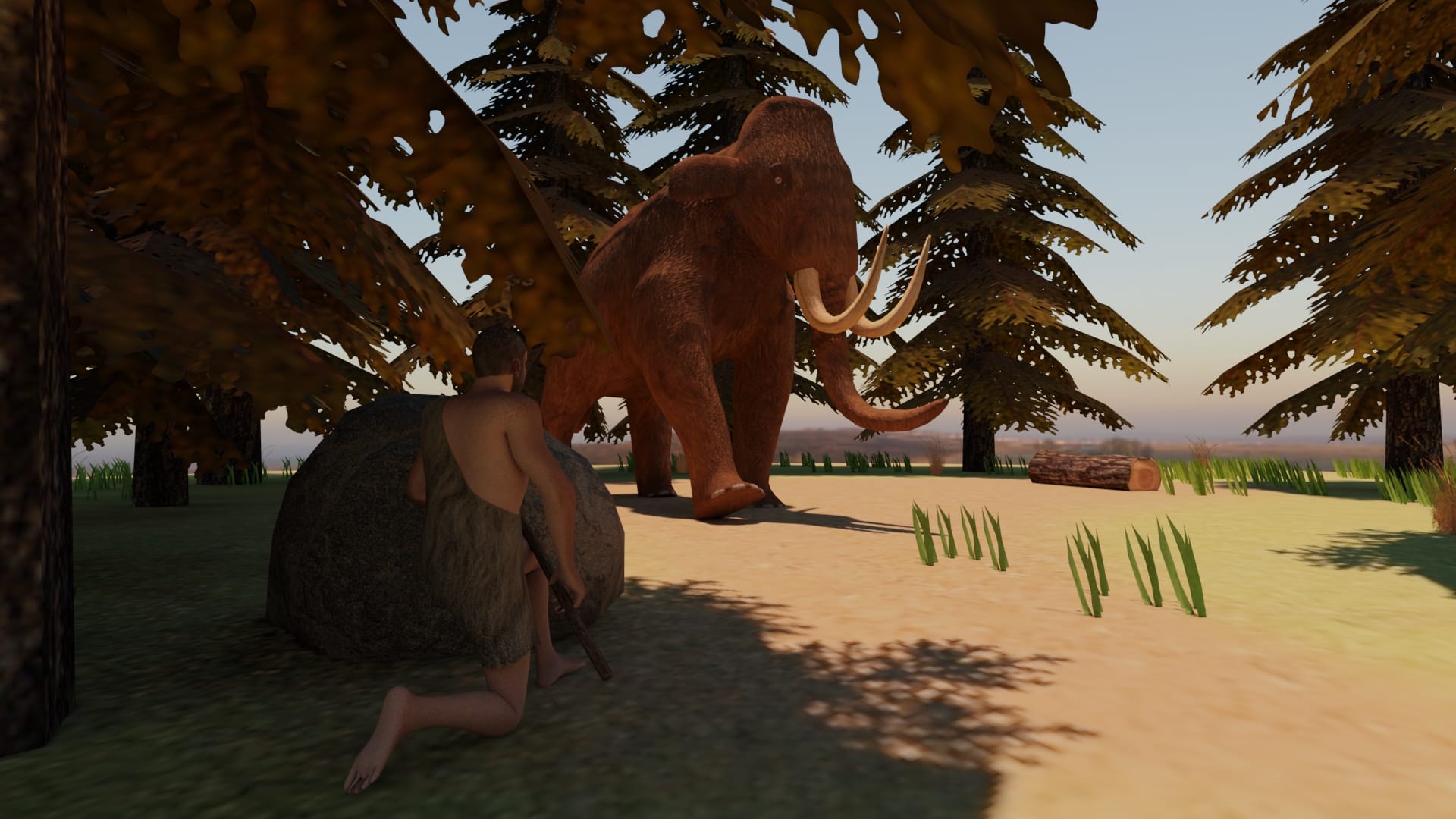
Year 3 and Year 4 students watch a Stone Age house being built, stand inside a circle of standing stones that lines up with the sun, and visit the tombs at Lanyon Quoit and Avebury. They finish in a hunter-gatherer camp, with a woolly mammoth out on the plain. Every scene builds understanding of how people lived, what technology they had, and how they adapted to their environment.
Book a full-day visit and choose a different VR topic for every year group — making it super specific to each class's curriculum and exceptional value for money.
Each session includes a Virtual Reality segment where students are transported back in time. Using class sets of VR headsets, children explore 360° recreations of historical environments — from walking through ancient temples to witnessing the Great Fire of London.
Every activity is designed to bring history to life. Your facilitator selects and adapts activities based on the year group.
Stand at the bottom of England's largest gorge, with limestone cliffs rising almost 120 metres on both sides. Students find out how the caves here kept Stone Age people dry and safe — and meet Cheddar Man, the oldest complete skeleton ever found in Britain, who lived about 10,000 years ago.
All year groupsWatch a house being built the Stone Age way, with tools of stone and wood. Walls are woven from sticks and covered in mud, the roof is thick straw — and there is not a single nail or screw in it.
All year groupsStand among enormous stones set upright in a circle around 5,000 years ago and moved without machines. Students discover how the stones line up with the sun on the longest and shortest days of the year, and discuss why people might have built them.
All year groupsVisit the Cornish moors, where three tall stones hold up a 13-tonne capstone — as heavy as two African elephants. Built more than 5,000 years ago as a place to bury the dead, it shows how much effort Stone Age people put into their monuments.
All year groupsExplore one of the biggest and best preserved tombs of its kind in Britain. From outside it looks like a grassy hill; inside, a passage leads to stone chambers where nearly 50 people were laid to rest about 5,600 years ago.
All year groupsStep into a Stone Age camp and look around carefully. A woolly mammoth is being hunted out on the plain and a sabre-toothed cat is watching from the hills — the world Stone Age people woke up in every day.
All year groupsEvery session is designed around measurable outcomes that align with the National Curriculum and build historical thinking skills.
Students grasp the vast span of the Stone Age and understand it as a real period of human history.
Students see how Stone Age people built homes, used tools of stone and wood, and found safety in caves.
Students understand that standing stones, Lanyon Quoit and Avebury tell us important things about ancient people.
Students can imagine what daily life was like for Stone Age people and what challenges they faced.
We bring everything — your presenter, 16 VR headsets and the worksheets. You just tell us the date and year groups. No hidden costs, no extras.
Here’s how a typical full-day VR history workshop fits around your school day. KS2 sessions run 40 minutes; KS1 & EYFS sessions run 35 minutes. We’re flexible — we’ll work around your timetable. Seven classes rather than six? We combine two year groups into one session — just tell us when you book.
Schools love booking a VR History day alongside our hands-on Future Skills workshops — giving students a full spectrum of immersive learning experiences in a single day or across the term.
View Future Skills Workshops →