Remembrance Day 2026 · Wednesday 11 November

Remembrance.
Beyond two minutes’ silence.

A free, ready-to-run primary classroom kit for Remembrance Week 2026. Five daily themes — The Poppy, At Home, The Codebreakers, Voices We Don’t Always Hear, and Our Two Minutes — with an assembly script, KS1 and KS2 activities, a parent letter, and a trusted-resources directory. Print, copy, adapt — or just open it on your IWB and run.

Remembrance Day 2026
Wednesday 11 November — two minutes’ silence at 11am
Spark2 angle
World War 2 in VR — whole school, one day
EYFS – Y6Whole-school ready
5 daysBuild to the silence
~14 minsAssembly script (10 slides)
FreeNo sign-up needed
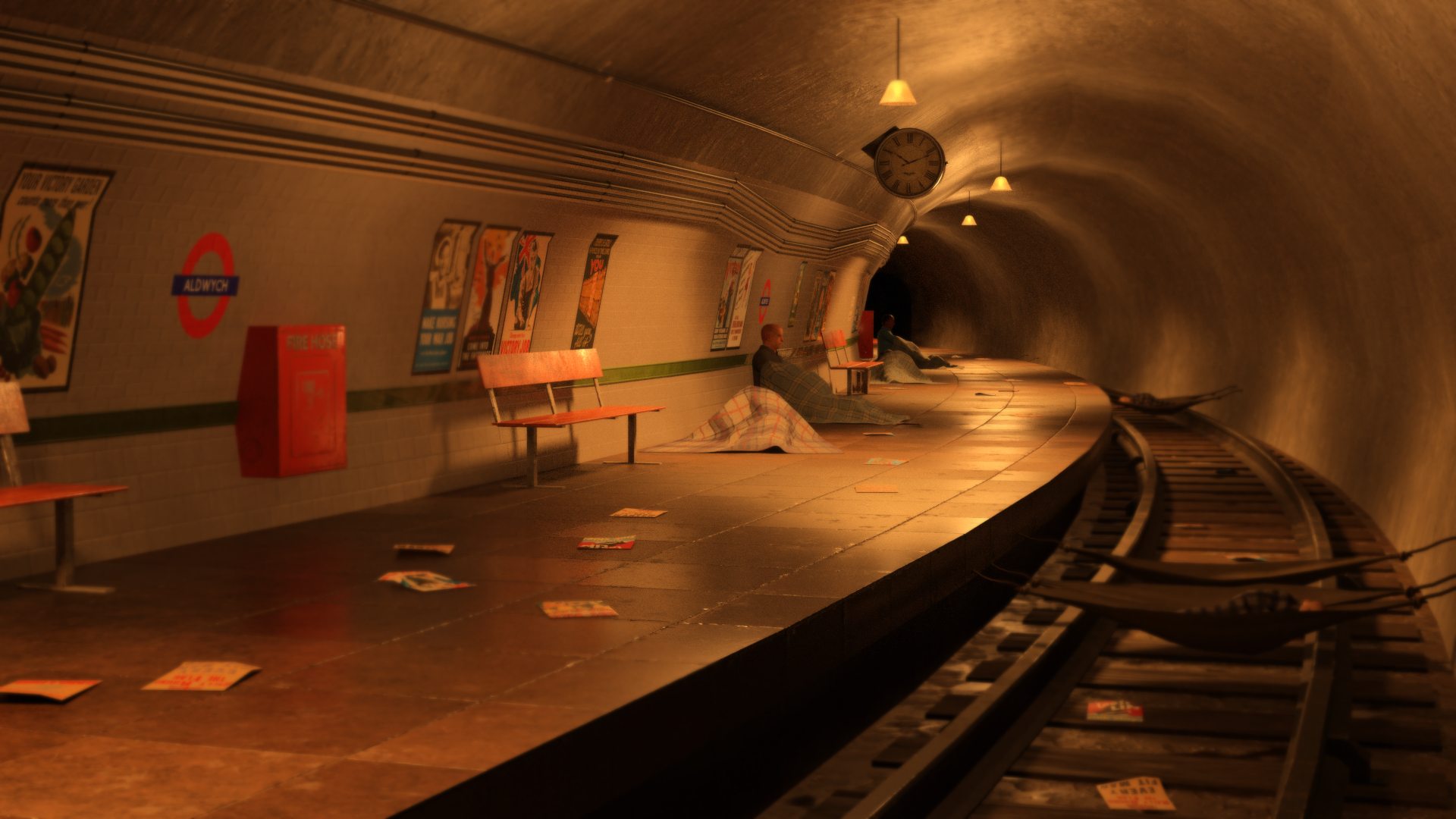
Spark2 World War 2 VR workshop in action
🌿

The 5-Day Remembrance Plan

One theme per day. A small, concrete activity that fits in any classroom. Five days that build to a silence the children actually feel.

Mon · Day 1

The Poppy

Why we wear it

The poppies of Flanders fields. John McCrae’s poem. Why this particular flower, in this particular country, every November.

Try this: Each child folds a paper poppy and writes one word inside it — what the poppy means to them. Display on a class “poppy field.”
Tue · Day 2

At Home

Blitz · Evacuation · Rationing

The home front. What a child your age would have lived through — the Blackout, the Anderson shelter, sweet rationing, evacuation.

Try this: A “ration day” lunchtime. Talk through what one child’s weekly ration looked like in 1942 and compare with today’s lunchbox.
Wed · Day 3

The Codebreakers

Bletchley Park · Turing

The maths that won the war. Bletchley Park, the Enigma machine, the codebreakers who shortened the conflict by years.

Try this: A class Caesar cipher challenge. Pairs encode a kind message, swap, decode. The day Britain’s maths classrooms beat a code that won a war.
Thu · Day 4

Voices We Don’t Often Hear

Commonwealth · Land Girls

Walter Tull. The Caribbean RAF airmen. The Indian Army. The Land Girls. Every part of WW2 that doesn’t make the school textbook.

Try this: Each pair researches one person from a list of less-told WW2 voices and writes a short biography for the class “wall of names.”
Fri · Day 5

Our Two Minutes

Reflection & Pledge

The school’s own remembrance ceremony. The two minutes’ silence at 11am, prepared for and properly held. Then a pledge.

Try this: Each child writes one quiet promise on a paper poppy. “I will look after ____.” Read aloud after the silence, taken home.
📢

Assembly Script & Slides

Whole-school assembly in the run-up to Remembrance Day. ~14 minutes, mapped slide-by-slide to the free assembly slides. Reception–Year 6.

10 slides · ~14 minutes · Reception–Year 6 Open the slides →
Slide 1
~1 min

Welcome & introduce the week

Open with the title slide. Read the hero copy.

“Good morning. Next Wednesday is the 11th of November — Remembrance Day. At 11 o’clock that morning, every school in this country, every workplace, every train station, every shop, will be quiet for two minutes. Two minutes’ silence to remember. This week, we’re going to learn what we’re remembering — so that when our two minutes comes, every one of you will know exactly what they’re for.”
Slide 2
~1.5 min

Why we wear a poppy

The Flanders field. John McCrae’s poem. Why this particular flower.

“In a place called Flanders, in Belgium, more than a hundred years ago, soldiers fought in the First World War. After the fighting, in fields full of mud and craters, one flower grew through the ruined earth. The poppy. A doctor called John McCrae looked at those fields and wrote: In Flanders fields the poppies blow / Between the crosses, row on row. That’s why we wear a poppy. The flower that grew where everything else couldn’t.”
Slide 3
~1.5 min

The day the country stops

Two minutes at 11am. Why eleven. What happens during the silence.

“The 11th day of the 11th month, at the 11th hour. That’s the moment the First World War ended. So that’s the moment we stop — every year, since 1919. Two minutes is a long time when the whole country goes quiet. In that silence, we’re thinking about people who never came home. Soldiers, sailors, pilots, nurses, doctors, codebreakers, fire-watchers, mums and dads. Most of them weren’t much older than the children sitting at the back of this hall.”
Slide 4
~1.5 min

At home in Britain — the Blitz

Anderson shelters, the Blackout, evacuation, rationing.

“Imagine your bedroom. The lights go out at 7pm every night because if a German bomber sees a light, your house is the target. You sleep with your shoes by your bed because the air-raid siren might go off at 3 in the morning. Your dad has dug a shelter into the back garden. Your sweets are rationed — one bar of chocolate every two weeks. That was childhood for kids your age, every single night, for years. They went to school the next day anyway.”
Slide 5
~1.5 min

Voices we don’t always hear

Walter Tull. Caribbean RAF airmen. The Indian Army. The Land Girls. The codebreakers.

“The story of the war isn’t just one story. It’s thousands. Walter Tull was a Black footballer who became one of the British Army’s first Black officers — he died on the Western Front. Hundreds of pilots from the Caribbean came to fight for the RAF. Two and a half million soldiers came from the Indian Army — the largest volunteer army the world has ever seen. Women called Land Girls grew the food. And in a place called Bletchley Park, ten thousand mathematicians, mostly women, were breaking the German codes.”
Slide 6
~1.5 min

The Codebreakers

Bletchley Park. Enigma. The mathematics that shortened the war.

“Here’s the part you almost never hear about. The Germans had a machine called Enigma that wrote messages in code. Nobody could read them. The British government found a quiet country house in Buckinghamshire called Bletchley Park, and put 10,000 of the brightest mathematicians in the country to work. They built a machine to crack the code. And they did. Historians say it shortened the war by two whole years. Two years. That’s thousands and thousands of lives saved — by maths.”
Slide 7
~1.5 min

Real Story — Alan Turing

Bring it home with the Turing anchor. Ages 12–18 when the war started, broke the code, on the £50 note now.

“One of the cleverest of the codebreakers was a young man called Alan Turing. He was a young Cambridge mathematician. He was clever in the way some children at this school are clever — he saw things other people couldn’t. Alan designed a machine that broke a code people thought couldn’t be broken. After the war, the country didn’t treat him kindly. But years later, the country said sorry. The Queen pardoned him. And today, if you take a £50 note out of your pocket, you’ll see Alan’s face on it. The boy who liked maths, who saved millions of lives, on our money.”
Slide 8
~1.5 min

Why we still remember now

Looking after veterans. Promises kept. The next generation.

“You might be thinking — the war ended a long time ago. Why do we still remember? Two reasons. First, the people who fought for us made us a promise: that we wouldn’t forget. Keeping a promise matters. Second, there are still people in our country today who went through it. There are still soldiers and sailors who fought. There are still children who sheltered from bombs — they’re grandparents now. When we wear a poppy, we’re looking after them too.”
Slide 9
~1 min

Your Mission This Week

Walk through the 5-day plan. Each child commits to one small action.

“Here’s your mission this week. Five days. Five things. Monday — learn why the poppy. Tuesday — learn what home was like. Wednesday — meet the codebreakers. Thursday — meet the people whose names get missed. Friday — our school’s own quiet two minutes. By Friday, every one of you is going to write one quiet promise on a paper poppy — one small kind thing you’ll do for someone, just because.”
Slide 10
~1 min

Mission Complete — the silence is yours

Send children back to class with a single intention for the week.

“On Wednesday at 11 o’clock, when the silence falls in this hall, you’ll know exactly what it’s for. You’ll know about Flanders. You’ll know about the people in shelters and the people on rooftops. You’ll know about Walter Tull and the Land Girls and the codebreakers. You’ll know about Alan Turing on the £50 note. And the silence won’t feel empty — it’ll feel full. That’s the gift this week is going to give you.”

Classroom Activities

Two ready-to-go activities per phase. 25–45 minutes each. Materials are basic — paper, pens, paper plates, scissors.

KS1 · EYFS–Y2

Paper Poppy Promises

Time: 30 minutes · Day: Best on Mon (The Poppy)

Children fold a simple paper poppy and write one quiet promise inside. Used in the Friday assembly as the school’s wall of pledges.

  1. Show photographs of the Flanders poppy field on the IWB. Read three lines of John McCrae’s poem.
  2. Each child folds a four-petal paper poppy from red and black paper (template at the back of this kit).
  3. On the inside, in their best handwriting: “I will look after ____.”
  4. Display all the poppies together — the “Class Poppy Field” — on a single wall for the whole week.
Materials: Red and black paper squares (15cm), scissors, glue, pencils. Optional: green pipe-cleaners for stems.
KS1 · EYFS–Y2

Letters to a Soldier

Time: 35 minutes · Day: Best on Tue (At Home)

Children write a short letter to a soldier they’ll never meet. Genuine writing-for-purpose. Caring, simple, age-appropriate.

  1. Show a photograph of a soldier’s mailbag arriving at the front line. Explain how letters from home kept soldiers going.
  2. Each child writes a short letter that begins: “Dear Soldier, my name is ____. Today at school we...”
  3. Letters are read aloud in pairs — not for marking, just for sharing.
  4. Optional: real letters can be sent to a local Royal British Legion home (check current programme first).
Materials: Lined writing paper, pencils. Optional: envelopes for the “mailbag” display.
KS2 · Y3–Y6

Decode the Message (Caesar Cipher)

Time: 45 minutes · Day: Best on Wed (Codebreakers)

Children become Bletchley codebreakers for the day. The Caesar cipher is mathematical, hands-on, and shows how Enigma worked in miniature. Big payoff — the maths that helped win a war.

  1. Explain the Enigma in 90 seconds: a typewriter that turned every letter into a different letter, in a way that changed every day.
  2. Show the simpler Caesar cipher (shift every letter by 3). Decode “KHOOR” together. (HELLO!)
  3. In pairs, children encode a one-sentence kind message using a shift of their choice. They write the shift number on the back.
  4. Pairs swap papers. Each pair has 5 minutes to crack the other pair’s code without seeing the shift number.
  5. Discussion: why did the Germans think Enigma was unbreakable? What did Turing’s team have to invent to break it?
Materials: A hand-drawn cipher wheel or alphabet strip, paper, pencils.
KS2 · Y3–Y6

The Wall of Names

Time: 40 minutes · Day: Best on Thu (Voices We Don’t Often Hear)

Children research one less-told WW2 voice and write a short biography for the class wall. Demonstrates that the war was fought by people from everywhere.

  1. Show a list of 12 less-told voices on the IWB — e.g. Walter Tull, Cy Grant, Lilian Bader, Noor Inayat Khan, Mary Soames, Indra Lal Roy, Connie Mark.
  2. Each pair picks one name from the list and finds three facts about them (school library or supervised Chromebooks).
  3. They write a short biography on a card: name, role, one extraordinary thing they did.
  4. Cards go on a long “Wall of Names” in the classroom or hall.
  5. Whole-class discussion: which name surprised them most? Whose story should be in everyone’s history book?
Materials: A4 cards, pens, school library or Chromebooks for fact-finding. Imperial War Museum’s Lives of the First World War + Voices of the Second World War sites are good starting points.
💬

Parent Communication Template

A short letter you can send home Monday morning, or paste into the school newsletter. Tells parents what we’re doing and how to extend it.

Letter / Newsletter Insert

Remembrance Week at [School Name]

Dear Parents and Carers,

This week we’re marking Remembrance Day, ahead of the two minutes’ silence at 11am on Wednesday 11 November. Five days, five themes: The Poppy, At Home, The Codebreakers, Voices We Don’t Always Hear, and Our Two Minutes.

Each day children will explore one theme through hands-on activities — folding paper poppies, writing letters to soldiers, breaking real codes the way Bletchley Park did, and meeting WW2 voices we don’t always learn about (Walter Tull, the Caribbean RAF airmen, the Land Girls). By Friday, every child writes a quiet promise on a paper poppy that they’ll bring home.

How you can join in at home:

· Talk about the poppies you see in the high street. Your child will be able to tell you why we wear them.
· Borrow a children’s book from the local library. We recommend The Lion and the Unicorn (Shirley Hughes), Rose Blanche (Roberto Innocenti, KS2), and The Boy at the Back of the Class for the connection between WW2 and refugee stories today.
· Visit a war memorial together this weekend. There’s one in almost every village — read the names.
· If you have a relative who served (or who lived through the war), ask them to share a story. Children love a real connection.
· At 11am on Wednesday 11th, observe the two minutes’ silence at home as well as at school.

Useful resources for parents include the Royal British Legion, the Imperial War Museums, and BBC Bitesize WW2 for primary.

With best wishes,
[Headteacher / History Coordinator]

📚

Remembrance & WW2 Resources

Trusted UK resources for primary schools and parents. Use alongside this kit.

Royal British Legion

Schools resources, age-appropriate

The official charity behind Remembrance. Free schools resource pack, the Poppy Appeal in schools, and the “Stories of Remembrance” primary library.

britishlegion.org.uk →

Imperial War Museums

Primary-source archive + lessons

UK’s leading WW1/WW2 museum service. Free digital classroom resources, oral-history archive, photograph library. The Lambeth and Manchester sites both have free schools entry.

iwm.org.uk →

Bletchley Park

Codebreakers, Enigma, primary-school visits

The home of WW2 codebreaking. Free downloadable Caesar cipher activity packs, schools visits, virtual tours, and a free Turing biography pack for primary classrooms.

bletchleypark.org.uk/learn →

BBC Bitesize

WW2 for KS1 + KS2

Free curriculum-aligned video and reading resources covering The Blitz, evacuation, rationing, D-Day and VE Day. Perfect to complement classroom teaching.

bbc.co.uk/bitesize →

Holocaust Memorial Day Trust

Age-appropriate primary resources

Specialist primary-friendly material on the Holocaust and other genocides. Stories of rescue and courage, designed to be handled with care for KS2 audiences.

hmd.org.uk →

Commonwealth War Graves Commission

Search a name · visit a memorial

Search by name to find a relative or local soldier’s grave. Free schools programmes and the “CWGC for Schools” library — including Walter Tull and Commonwealth voices packs.

cwgc.org/learn →

Want more than a one-week kit?

Make World War 2 your Remembrance Week

Our “World War 2” workshop is a whole-school day in VR. A specialist facilitator brings the headsets to your school. Every class — EYFS through Year 6 — gets their own age-appropriate session. Children shelter in the Blitz, walk onto the D-Day beach, and stand in Trafalgar Square on VE Day.

1,800+Schools delivered
383,000+Students inspired
EYFS–Y6Age-appropriate
Book a World War 2 day →