Black History Month 2026 · October

Black History.
Beyond a single assembly.

A free, ready-to-run primary classroom kit for Black History Month 2026. Five daily themes — Mary Seacole, Windrush, Rosa Parks, Mary Jackson, and modern changemakers — with an assembly script, KS1 and KS2 activities, a parent letter, and a trusted-resources directory. Run any week of October. Print, copy, adapt — or just open it on your IWB and run.

Black History Month 2026
Throughout October — pick any week
Spark2 angle
Black history in VR — whole school, one day
EYFS – Y6Whole-school ready
5 daysFive lives, five lessons
~14 minsAssembly script (10 slides)
FreeNo sign-up needed
Spark2 Black History VR workshop in action
🌏

The 5-Day Black History Plan

One life per day. Five stories that connect. Five days that teach Black history as British history.

Mon · Day 1

Mary Seacole

1805–1881

Jamaican-British nurse who funded her own journey to the Crimean front and built the “British Hotel” to care for wounded soldiers. Voted greatest Black Briton in 2004.

Try this: A “Wanted: a nurse on the front” job advert. Children write what skills Mary needed and why she had to fund herself.
Tue · Day 2

Windrush

22 June 1948

HMT Empire Windrush docks at Tilbury. 1,027 passengers — most from the Caribbean — arrive to help rebuild post-war Britain. The start of modern multicultural Britain.

Try this: The packing-trunk activity. Children list 10 things they’d take if they were leaving home for a new country — and what they’d miss most.
Wed · Day 3

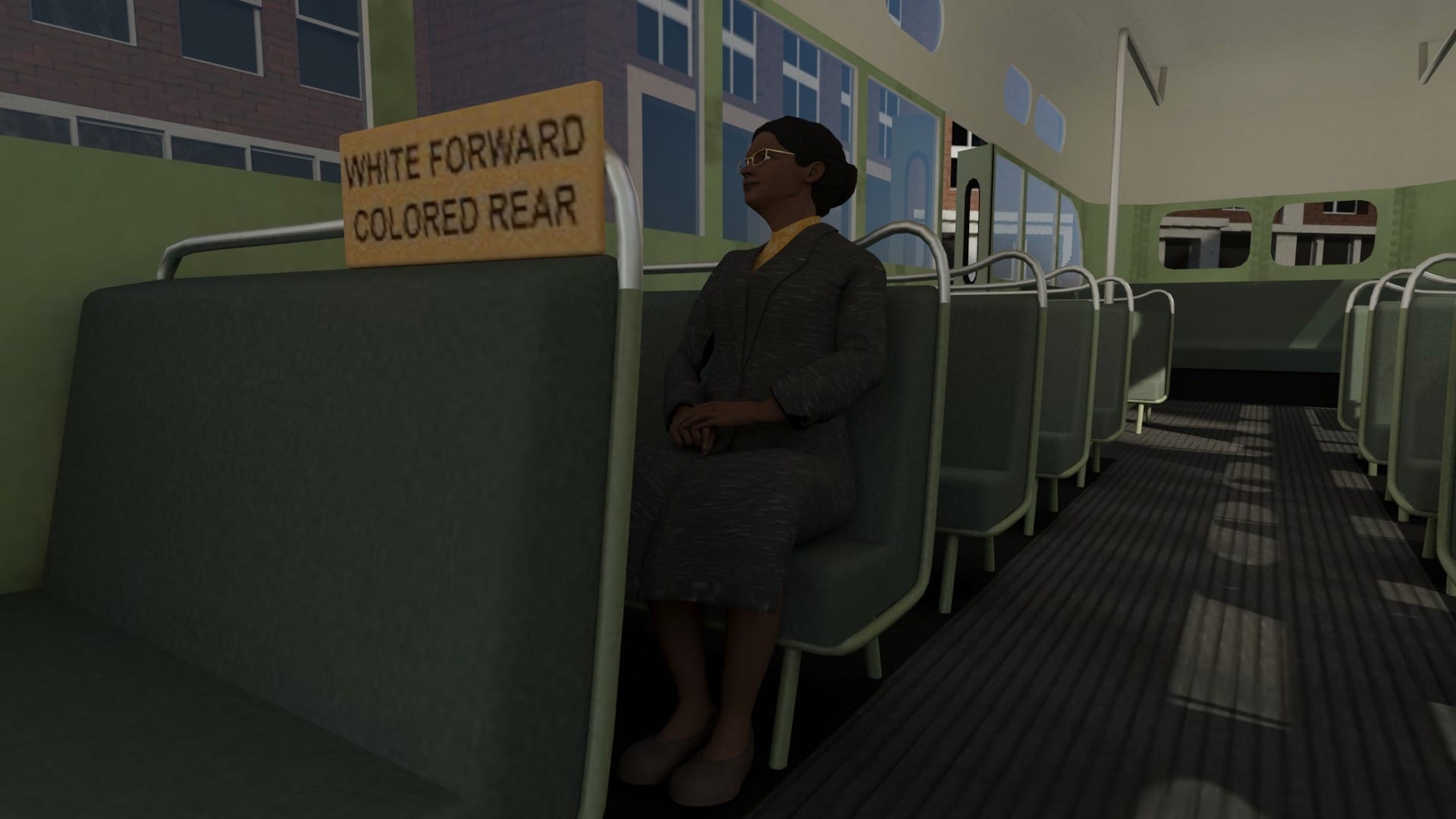
Rosa Parks

1 December 1955

Refused to give up her seat on a Montgomery bus. Sparked the bus boycott that lit the US Civil Rights Movement. A small action; a global change.

Try this: The bus diagram. Each child writes one small action they could take this week if they saw something unfair. Display on a paper bus.
Thu · Day 4

Mary Jackson

NASA · 1921–2005

NASA’s first Black female engineer. Her wind-tunnel engineering helped aircraft fly faster and safer — while her colleague Katherine Johnson calculated the paths that put humans on the Moon. The real Hidden Figures story.

Try this: The hidden figure. Children pick one person whose work they rely on every day but never see — bin collector, postal worker, nurse — and write their thank-you.
Fri · Day 5

Pledge

Modern changemakers

The Changemaker Pledge. Children pick a modern Black Briton who’s changing something today — and write what they want to change in their own school.

Try this: Pledge cards children take home. “I will change ____ in my school by ____.” Photos for the parent newsletter.
📢

Assembly Script — reads from the slides

Whole-school assembly to launch the week or month. ~14 minutes, mapped slide-by-slide to the classroom presentation. Reception–Year 6.

10 slides · ~14 minutes · Reception–Year 6
Slide 1
~1 min

Welcome & introduce the month

Open with the title slide. Read the hero copy.

“Good morning. This month is something special — it’s called Black History Month, and it happens every October all around the country. But we’re not going to do one assembly and forget about it. This month, every class in this school is going to meet some incredible people — people who changed the country we live in — and ask one question: what will I change?
Slide 2
~1.5 min

What is Black History?

Define it simply: Black history is British history. It’s not extra; it’s the missing pages.

“Here’s the simplest way to think about Black History. Black history is British history. It’s not a side story. It’s pages of our country’s story that for a long time weren’t told properly. This month, we put those pages back where they belong — and we look at the people whose names should be as familiar to you as the kings and queens.”
Slide 3
~1.5 min

Black history goes back centuries

Quick timeline. Black Britons have been here for centuries — Roman soldiers, Tudor courtiers, Georgian writers.

“Black people have lived in Britain for almost two thousand years. There were Black soldiers in the Roman army stationed at Hadrian’s Wall. There were Black musicians in King Henry VIII’s court. There was a writer called Olaudah Equiano in the 1700s whose book changed how Britain thought about slavery. So when we talk about Black history, we’re talking about most of British history.”
Slide 4
~1.5 min

Mary Seacole — the nurse who paid her own way

The story arc: Jamaica → turned away by the army → funds herself → British Hotel on the Crimean front.

“Meet Mary Seacole. Born in Jamaica in 1805. When the Crimean War broke out, Mary — an experienced nurse — came to London and asked to join Florence Nightingale’s team. She was turned away. So Mary did something extraordinary. She paid for the journey herself. She built her own ‘British Hotel’ right next to the front line. She nursed wounded soldiers under fire. Years later, Britain voted her the greatest Black Briton in our history. Sometimes when the door closes, you build your own door.”
Slide 5
~1.5 min

Windrush — 1948

Empire Windrush docks at Tilbury. 1,027 passengers. Why they came. What they built.

“On the 22nd of June 1948, a ship called the Empire Windrush docked at Tilbury, just down the river from London. On board were 1,027 people, most of them from the Caribbean. Britain had asked them to come and help rebuild after the Second World War. They worked in our hospitals, on our buses, on our trains, in our factories. The NHS, in many ways, was built on their shoulders. The generation that arrived in those years — we call them the Windrush generation. Modern multicultural Britain starts here.”
Slide 6
~1.5 min

Rosa Parks — one seat, one moment

Montgomery, 1955. The bus. The boycott. The Civil Rights Movement.

“On a December evening in 1955, in Montgomery, Alabama, a tired woman named Rosa Parks finished her shift at a department store and got on the bus home. The bus driver told her to give up her seat. Rosa quietly said no. She was arrested. But that small refusal sparked something huge — a 381-day bus boycott, a young pastor called Martin Luther King leading the marches, and a Civil Rights Movement that changed America forever. Rosa Parks teaches us this: a small action, in the right moment, can change history.”
Slide 7
~1.5 min

Real Story — Dr Maggie Aderin-Pocock

Bring it home with the Maggie Aderin-Pocock anchor. Black British scientist, makes space accessible to kids today.

“You might recognise her face from telly. Dr Maggie Aderin-Pocock is a space scientist — a real, working-on-real-rockets space scientist. She presents the BBC’s Sky at Night. She writes children’s books about the universe. She’s helped build telescopes that look back to the start of time. But here’s the thing. As a child, Maggie was told she wouldn’t make it. She’s dyslexic. She was put in the bottom set. She decided that wasn’t going to stop her — and now she’s one of the most well-known scientists in this country. Black history isn’t over. It’s being made right now. By people like Maggie.”
Slide 8
~1.5 min

Black history is being made now

Open the field. Show modern Black Britons across many fields — sport, music, science, business, leadership.

“Look around the country today. Lewis Hamilton driving an F1 car faster than anyone in history. Stormzy funding scholarships that send Black students to Cambridge. Dame Sharon White, who made history as the first Black woman to lead John Lewis. Marcus Rashford fighting to make sure no child goes hungry at school. Diane Abbott, our first Black female MP, still in parliament after almost forty years. Black history doesn’t live in textbooks — it’s being written right now, by people you might pass in the street, see on the telly, hear on the radio. Tomorrow’s names are still being chosen.”
Slide 9
~1 min

Your Mission This Month

Walk through the 5-day plan. Each child commits to one small action.

“Here’s your mission this month. Five lives. Five lessons. Mary Seacole — if a door closes, build your own. Windrush — the people who built our country came from everywhere. Rosa Parks — small actions can change everything. Mary Jackson — do the work, even when no-one’s watching. Dr Maggie — you decide what you’re capable of, not the people around you. By Friday, every one of you is going to write down one thing you want to change.”
Slide 10
~1 min

Mission Complete — pick one for today

Send children back to class with a single action commitment for the day.

“Mary. Windrush. Rosa. Mary Jackson. Maggie. Five names you didn’t walk in here knowing all of, and now you do. Black History Month is one month a year — but the people we’ve met don’t live in October. They live in every assembly hall in this country, and in the people you’ll become. Right now, before you go back to class, decide one small kind or brave thing you’ll do today. That’s how Black History Month starts. With one of you.”

Classroom Activities

Two ready-to-go activities per phase. 25–45 minutes each. Materials are basic — paper, pens, fabric scraps, newspapers.

KS1 · EYFS–Y2

Significant Person Portrait Wall

Time: 30 minutes · Day: Best on Mon (Mary Seacole)

Children draw a portrait of one significant Black person from the week and write one sentence about why they matter. Maps cleanly to KS1 “significant individuals”.

  1. Show photographs of Mary Seacole, Rosa Parks, and Dr Maggie Aderin-Pocock on the IWB.
  2. Each child picks one person and draws a portrait on A4. Bold marker outline + colour.
  3. Underneath, in their best handwriting, they finish: “____ matters because ____.”
  4. Display all portraits on a single wall — the “People We’ve Met This Month” wall — for the rest of October.
Materials: A4 paper, pencils, felt-tips, photo prints of each figure (or IWB display).
KS1 · EYFS–Y2

Heritage Squares Quilt

Time: 35 minutes · Day: Best on Tue (Windrush)

Each child decorates one paper square showing “something from my family’s story”. Squares are joined into a class quilt that celebrates how everyone’s family came from somewhere.

  1. Show the Windrush picture and explain: “Everyone’s family came from somewhere — near or far.”
  2. Each child gets a 15cm paper square and draws one thing that comes from their family’s story — a food, a flag, a dance, a song, a person.
  3. Squares are joined into a paper-quilt grid in the classroom or hall.
  4. Each child shares their square with a partner. No square is more important than another.
Materials: 15cm coloured paper squares, felt-tips, glue, large backing paper or display board.
KS2 · Y3–Y6

Windrush Front Page

Time: 45 minutes · Day: Best on Tue (Windrush)

Children produce the front page of a 1948 newspaper covering the Empire Windrush’s arrival. Genuine writing-for-purpose with a real historical event at its heart.

  1. Show two contrasting headlines from real 1948 papers (one welcoming, one not). Discuss how the same event can be told differently.
  2. Show three primary-source photos (the dockside, the gangplank, a passenger’s portrait).
  3. In pairs, children draft a front-page headline, a 4-paragraph article, and a captioned photo.
  4. Pin every front page on the wall together. Compare angles and word choices.
  5. Bonus: pair each “1948” front page with a “2026” thank-you front page to a Windrush descendant the children know.
Materials: A3 newspaper template (free online), pens, three printed primary-source photos per group.
KS2 · Y3–Y6

Then & Now Timeline

Time: 40 minutes · Day: Best on Fri (Modern changemakers)

Children build a class timeline pairing a historical Black Briton with a modern one in the same field. Demonstrates that Black history is a continuous, living thread.

  1. Show six historical-modern pairs on the IWB — e.g. Mary Seacole ↔ Dame Elizabeth Anionwu (nurse); Walter Tull ↔ Marcus Rashford (footballer); Dr Harold Moody ↔ Diane Abbott (campaigner).
  2. Each pair of children picks one pairing and researches three facts about each person.
  3. They create a side-by-side “Then & Now” card.
  4. Cards are pinned to a long timeline along one classroom wall.
  5. Whole-class discussion: “What thread connects them?” (e.g. nursing, sport, politics, science).
Materials: A4 cards, pens, a long string or tape line on the wall, optional Chromebooks for fact-finding.
💬

Parent Communication Template

A short letter you can send home Monday morning, or paste into the school newsletter. Tells parents what we’re doing and how to extend it.

Letter / Newsletter Insert

Black History Month at [School Name]

Dear Parents and Carers,

This October is Black History Month. We’re using it as a chance to make Black history what it really is — British history. Five days, five lives, five lessons: Mary Seacole, Windrush, Rosa Parks, Mary Jackson, and modern changemakers.

Each day children will explore one story through hands-on activities — portrait walls, a heritage paper-quilt, a 1948 newspaper front page, a “Then & Now” timeline. By Friday, every child writes their own Changemaker Pledge: one thing they’d like to change in the world around them, no matter how small.

How you can join in at home:

· Talk about your family’s journey. Where did your grandparents come from? What did they do?
· Borrow a children’s biography from the local library. We recommend Little People, Big Dreams: Mary Seacole, Coming to England (Floella Benjamin), and The Extraordinary Life of Stormzy.
· Watch Sky at Night (BBC iPlayer) with your child — Dr Maggie Aderin-Pocock makes space feel possible.
· Ask your child what their Changemaker Pledge is — sign it, stick it on the fridge.
· Visit the BBC Bitesize Black history pages together (KS1 & KS2 specific).

Useful resources for parents include the Black Curriculum, the Black History Month UK hub, and BBC Bitesize Black History.

With best wishes,
[Headteacher / History Coordinator]

📚

Black History & Inclusion Resources

Trusted UK resources for primary schools and parents. Use alongside this kit.

The Black Curriculum

Free schools resources, KS1–KS3

Award-winning UK social enterprise. Lesson plans, downloadable activity packs and curriculum-aligned units across British Black history.

theblackcurriculum.com →

Black History Month UK

The official BHM hub

The campaign hub itself. Features, profiles, school resources, and the annual theme. Bookmark for October every year.

blackhistorymonth.org.uk →

BBC Bitesize

Black history for KS1 + KS2

Free curriculum-aligned video and reading resources. Perfect to complement classroom teaching for both Key Stages.

bbc.co.uk/bitesize →

Windrush Foundation

Stories, oral histories, schools pack

Founded by Arthur Torrington CBE. Primary-source oral histories of the Windrush generation, plus a free schools resource pack.

windrushfoundation.com →

Stephen Lawrence Day Foundation

Live your best life · ambition into action

The official charity behind Stephen Lawrence Day (22 April). School resource packs and the Build It campaign for primary classrooms.

stephenlawrenceday.org →

Royal Historical Society

Race, ethnicity & equality in UK history

The RHS’s teaching guide for race & ethnicity in UK history teaching. Excellent grounding for History Coordinators planning a long-term scheme.

royalhistsoc.org →

Want more than a one-week kit?

Make Black History your October

Our “Black History” workshop is a whole-school day in VR. A specialist facilitator brings the headsets to your school. Every class — EYFS through Year 6 — gets their own age-appropriate session. Children walk through Windrush, meet Mary Seacole at the British Hotel, and stand on the Montgomery bus.

1,800+Schools delivered
383,000+Students inspired
EYFS–Y6Age-appropriate
Book a Black History day →